DeepSeek API Pricing: Every Model, Rate & Discount Explained
DeepSeek built its reputation on a simple proposition: frontier-class AI models at a fraction of Western prices. In 2026 that proposition is stronger than ever — the current lineup’s cheapest model costs $0.15 per million input tokens off-peak, roughly 95% less than Anthropic’s flagship API rates. But DeepSeek’s pricing has quirks you will not find at OpenAI or Anthropic: rates that double during peak hours, cache discounts up to 98%, and a model lineup that changed significantly in September 2026.
This guide breaks down DeepSeek API pricing in 2026 completely: every model’s rate, how peak and off-peak billing works, whether any free tier exists, and how DeepSeek stacks up against the competition on cost. If you are comparing AI API costs more broadly, our breakdowns of Google Gemini API pricing and Perplexity’s pricing make useful companion reads.
DeepSeek API Pricing at a Glance (2026)
| Model | API name | Input / MTok (off-peak) | Output / MTok (off-peak) | Peak multiplier |
|---|---|---|---|---|
| V4.1 Flash | deepseek-flash |
$0.15 | $0.60 | 2x |
| V4 Pro | deepseek-v4-pro |
$0.66 | $1.98 | 2x |
Cache-hit input on either model bills at roughly 2% of the standard rate — a 98% discount. Every rate doubles during DeepSeek’s UTC peak windows. There is no free tier for production use, though new accounts may receive a one-time signup credit.
Those are the headline numbers. The details — which model to pick, when peak pricing hits, and how to actually pay half — are where the real savings live.
The 2026 Model Lineup: V4.1 Flash vs. V4 Pro
DeepSeek’s lineup changed on September 10, 2026, when V4.1 Flash launched and replaced the older V4 Flash outright. The launch was briefly dramatic: DeepSeek initially announced that all V4 Pro traffic would be migrated to V4.1 Flash, then reversed the decision within days after user pushback. The current state, per DeepSeek’s API changelog:
- DeepSeek V4.1 Flash (
deepseek-flash) is the default, cheapest model. DeepSeek claims it beats the flagship V4 Pro on performance, cost, speed, and task completion time — and independent benchmarks have largely backed that up. It is a 552B-parameter mixture-of-experts model with a 1M-token context window, and its weights are published on Hugging Face under the MIT license. - DeepSeek V4 Pro (
deepseek-v4-pro) continues to be served with unchanged billing. It is the heavyweight option: a 1.6T-parameter MoE architecture for the most demanding reasoning workloads, though its concurrency is capped at 500 requests.
For most developers, V4.1 Flash is the right default. It is cheaper, faster, and — unusually — benchmark-competitive with the flagship. Reach for V4 Pro only when a workload genuinely needs its massive capacity.
Peak vs. Off-Peak: DeepSeek’s Unusual Pricing Twist
No other major AI provider does this: DeepSeek charges different rates depending on the time of day. Peak-hour rates are exactly double the off-peak rates, and the peak windows are defined on the UTC clock (DeepSeek has specified weekday UTC windows as peak, with everything outside them counting as off-peak).
In practice:
| Model | Off-peak input | Peak input | Off-peak output | Peak output |
|---|---|---|---|---|
| V4.1 Flash | $0.15 / MTok | $0.30 / MTok | $0.60 / MTok | $1.20 / MTok |
| V4 Pro | $0.66 / MTok | $1.32 / MTok | $1.98 / MTok | $3.96 / MTok |
Why does DeepSeek do this? To smooth demand across its own infrastructure — the discount nudges batch workloads, evaluations, and non-urgent jobs into quieter hours. For developers, the implication is direct: shifting non-urgent workloads outside peak windows cuts the API bill in half with zero code changes. If you run nightly batch jobs, schedule them off-peak and pocket the difference.
One caution: third-party aggregators (OpenRouter and similar) sometimes list their own rates for DeepSeek models that differ from DeepSeek’s official numbers, reflecting their routing and margins. Always confirm which access path you are paying for before budgeting.
Cache Discounts: The 98% You Should Not Ignore
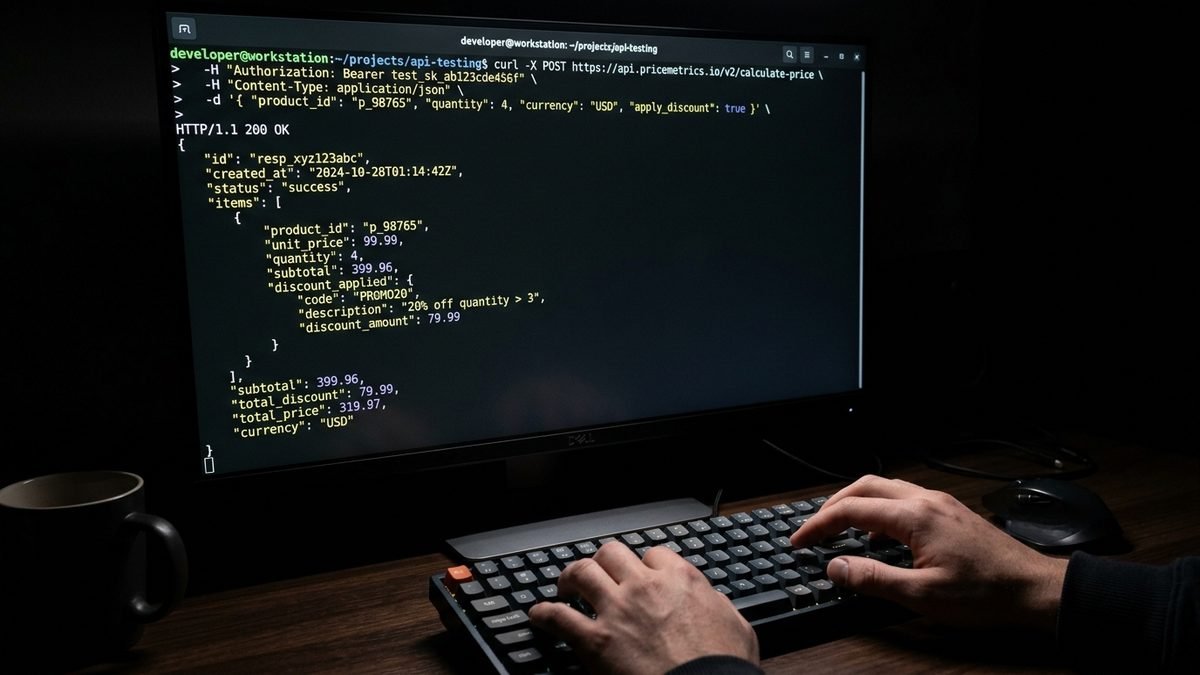
DeepSeek’s context caching discount is among the most aggressive in the industry: cached input tokens bill at about 2% of the standard rate. On V4.1 Flash off-peak, that is roughly $0.003 per million cached input tokens — effectively free.
This matters more than it sounds. Real-world LLM workloads — chatbots with system prompts, RAG pipelines re-reading retrieved context, agents re-scanning conversation history — repeat the same input tokens constantly. With a 98% cache discount, the input side of those workloads nearly disappears from your bill, leaving output tokens as the only meaningful cost. Design your prompts with stable prefixes (system instructions first, variable content last) to maximize cache hits.
Is the DeepSeek API Free?
No — not for production use. Every API request is billed per token from the first call, and DeepSeek does not publish an ongoing free tier. New accounts may receive a one-time signup credit, which is enough to prototype and run tests, but it is not a renewable free allowance.
This is worth stating plainly because DeepSeek’s rock-bottom prices create an expectation of free. The prices are real — $0.15 per million input tokens is genuinely close to free for small projects — but the meter runs from call one. Budget accordingly: even a modest prototype should have a prepaid balance and billing alerts configured.
How DeepSeek Billing Works
DeepSeek uses a prepaid credit model, which will feel familiar if you have used OpenAI’s API:
- Sign up at DeepSeek’s developer platform and verify your account.
- Generate an API key from the API keys section (keys start with
sk-). - Top up a balance — minimum top-ups are small (around $1–2), so experimenting is cheap. A $5 top-up buys roughly 18 million input tokens on V4.1 Flash off-peak.
- Call the API. Responses halt automatically when your balance hits zero — there is no surprise postpaid bill.
The API itself is OpenAI-compatible, which is a bigger deal than it sounds: you can point any OpenAI SDK or tool at DeepSeek by changing only the base URL and API key. No custom SDK, no proprietary client library, no refactoring. It also plugs straight into agentic frameworks, MCP clients, and tools like LangChain with a one-line config change.
Full endpoint documentation, model names, and the current rate card live in DeepSeek’s official API docs.
DeepSeek vs. the Competition on Price
To put the numbers in perspective, here is how DeepSeek’s flagship-adjacent pricing compares to Western providers’ comparable tiers (standard rates, per million tokens):
| Provider / Model tier | Input / MTok | Output / MTok |
|---|---|---|
| DeepSeek V4.1 Flash (off-peak) | $0.15 | $0.60 |
| DeepSeek V4 Pro (off-peak) | $0.66 | $1.98 |
| Anthropic Claude Sonnet 5 | $3.00 | $15.00 |
| Anthropic Claude Opus 5 | $5.00 | $25.00 |
| OpenAI GPT mid-tier (typical) | ~$2–3 | ~$8–12 |
| Google Gemini Flash-tier (typical) | ~$0.10–0.30 | ~$0.40–1.00 |
The gap is enormous at the flagship end and narrower at the budget end — Google’s cheapest Gemini tiers compete directly with DeepSeek Flash on price, which is worth knowing if you need a Western provider for compliance reasons. But for raw price-to-performance on reasoning-heavy work, DeepSeek remains in a league of its own. Developers weighing coding-assistant costs specifically should also look at GitHub Copilot’s 2026 pricing for the subscription-side comparison.
The honest caveats: DeepSeek is a Chinese company, which raises data-governance questions for regulated industries (the MIT-licensed weights offer a self-hosting escape hatch if you need full data sovereignty). And vendor-reported benchmarks should be treated as directional rather than gospel. Price is not the only variable — but it is a very large one.
Six Ways to Cut Your DeepSeek Bill in Half (or More)
- Schedule batch work off-peak. The single biggest lever. Nightly evaluations, bulk classification, and data pipelines cost literally half outside peak windows.
- Maximize cache hits. Put stable instructions first in your prompts and variable content last. The 98% cache discount makes repeated context nearly free.
- Default to V4.1 Flash. It beats V4 Pro on most benchmarks at a fraction of the price. Only escalate to Pro when Flash demonstrably fails.
- Cap output length. Output tokens cost 3–4x input tokens. Set
max_tokensdeliberately instead of accepting the 384k-token ceiling on every call. - Prepay small, alert early. The prepaid model means no surprise bills — but set a low-balance alert so a production workload does not silently halt at 3 AM.
- Self-host for steady-state scale. The MIT-licensed weights mean that at sufficient sustained volume, running the model on your own GPUs beats API pricing. Do the math at your actual token volume; the crossover point is lower than most teams expect.
Getting Started: Your First DeepSeek API Call
The whole setup takes about five minutes:
If you juggle several LLM providers, an AI gateway helps — our Portkey guide covers its AI gateway pricing and features. Portkey's AI gateway pricing
- Create an account on DeepSeek’s developer platform and top up a few dollars.
- Generate an API key and store it as an environment variable — never hardcode it.
- Point your OpenAI-compatible client at DeepSeek’s base URL with your key.
- Make a test call to
deepseek-flashand confirm billing shows the expected off-peak rate.
Because the wire format matches OpenAI’s, the code you already have for GPT models works with minimal changes — swap the base URL and key, keep everything else.
DeepSeek API Rate Limits and Quotas
Pricing is only half the story — throughput limits determine whether DeepSeek fits your workload. Key constraints to know:
- Concurrency caps. The V4 Pro endpoint is limited to around 500 concurrent requests. V4.1 Flash is more permissive, but neither model offers the effectively unlimited concurrency of hyperscaler-hosted APIs. High-throughput real-time services should load-test before committing.
- Context window. Both current models offer roughly a 1M-token context window, with maximum output lengths in the hundreds of thousands of tokens. Long-document processing and big RAG pipelines fit comfortably.
- Prepaid gating. Because billing is prepaid, your “rate limit” is also your balance — API calls halt when credit hits zero. For production, this makes low-balance alerting as important as any technical quota.
- No batch API discount. Unlike OpenAI’s Batch API (which discounts deferred jobs ~50%), DeepSeek has no separate batch tier — off-peak scheduling is its version of the batch discount. Do not wait for a batch endpoint; schedule around the UTC peak windows instead.
For most teams, these limits are generous. They only bite at serious scale — thousands of concurrent users or 24/7 streaming workloads — where the concurrency cap on Pro or the lack of a formal SLA may push you toward a Western provider despite the price gap.
Which DeepSeek Model for Which Workload?
A practical decision guide:
| Workload | Recommended model | Why |
|---|---|---|
| Chatbots, support copilots | V4.1 Flash | Cheapest, fastest, cache-friendly for repeated context |
| RAG pipelines | V4.1 Flash | 98% cache discount makes repeated retrieved context nearly free |
| Code generation | V4.1 Flash | Benchmark-competitive with Pro on coding tasks |
| Heavy reasoning, planning agents | V4 Pro | Maximum capacity for genuinely hard multi-step problems |
| Batch classification/extraction | V4.1 Flash off-peak | Half-price scheduling; accuracy is plenty for structured extraction |
| Evaluations and benchmarks | V4.1 Flash off-peak | Run large eval suites overnight at 50% cost |
The through-line: default to Flash, schedule off-peak, and reserve Pro for workloads where you have measured Flash falling short. Most teams never need Pro — which tells you how strong the Flash tier is.
DeepSeek API vs. Self-Hosting: Doing the Math
Because DeepSeek publishes its weights under the MIT license, self-hosting is a real alternative to the API — and at sufficient scale, the cheaper one. The tradeoff:
- API pros: Zero infrastructure work, instant scaling, no GPU procurement, pay only for what you use. Ideal for variable or growing workloads.
- Self-hosting pros: At high sustained volume, your own GPUs beat $0.15/MTok input pricing. Full data sovereignty — nothing leaves your network. No peak-hour pricing games, no concurrency caps, no prepaid balance to babysit.
- Self-hosting cons: V4.1 Flash’s 552B-parameter checkpoint needs roughly 510GB of disk and serious GPU memory — this is datacenter hardware, not a side project. You also inherit the ops burden: updates, monitoring, scaling.
The crossover math is straightforward: estimate your monthly token volume, multiply by the API rate, and compare against the amortized cost of the GPU capacity you would need. For most teams under tens of billions of tokens per month, the API wins on simplicity alone. Above that, run the numbers — the MIT license means the option is always on the table, which is itself a form of leverage over any provider’s pricing.
Frequently Asked Questions
Is the DeepSeek API really that cheap?
Yes. V4.1 Flash at $0.15/$0.60 per million tokens off-peak is roughly 5% of what Anthropic charges for comparable API access. The prices are real and billed per token from the first call.
When are DeepSeek’s peak hours?
DeepSeek defines peak windows on the UTC clock (weekday UTC windows count as peak); all rates double during peak and halve off-peak. Check the official API docs for the current schedule, since DeepSeek can adjust the windows.
What is the cheapest DeepSeek model?
DeepSeek V4.1 Flash (deepseek-flash) — $0.15 per million input tokens and $0.60 per million output tokens off-peak, with cache hits around $0.003. It is also the newest model in the lineup.
Does DeepSeek offer a free trial?
New accounts may receive a one-time signup credit — enough to prototype, not a recurring free tier. Production usage is billed per token from the start.
Can I use the DeepSeek API with my existing OpenAI code?
Yes. The API uses an OpenAI-compatible format, so you change the base URL and API key and keep the rest of your code. Most SDKs, frameworks, and agent tools work with a one-line change.
Is DeepSeek safe for commercial use?
The API operates under standard commercial terms with a zero-retention policy for training on API inputs. For strict data-sovereignty requirements, the MIT-licensed model weights can be self-hosted. Regulated industries should still run their own compliance review — and you can read more about DeepSeek itself at deepseek.com.
Final Thoughts
DeepSeek’s API pricing in 2026 remains the industry’s most aggressive: $0.15 per million input tokens off-peak on V4.1 Flash, a 98% cache discount, and an OpenAI-compatible API that drops into existing code with a one-line change. The quirks — peak-hour doubling, no free tier, a shifting model lineup — are manageable once you know them: schedule batch work off-peak, design for cache hits, and default to Flash.
For developers and teams watching AI costs, DeepSeek is the price anchor the whole market is measured against. Its combination of frontier-competitive models, a genuinely OpenAI-compatible API, and MIT-licensed weights gives you leverage no other provider offers: use the cheap API today, self-host tomorrow if the math favors it, and switch models with a one-line config change either way. Verify the current rate card in the official API documentation before you budget, because in this market, the only constant is that the numbers move.