EndBugFlow Software: What It Is, How It Works & Honest Review
“EndBugFlow” is one of those software names that shows up across dozens of guides and reviews — yet pinning down exactly what the product is takes some care. If you’ve searched for EndBugFlow software and found confident-sounding claims mixed with vague marketing, this guide separates what’s verifiable from what’s merely claimed, explains the debugging workflow it describes, and gives you a checklist to run before installing anything or connecting it to a real codebase.
What Is EndBugFlow Software?
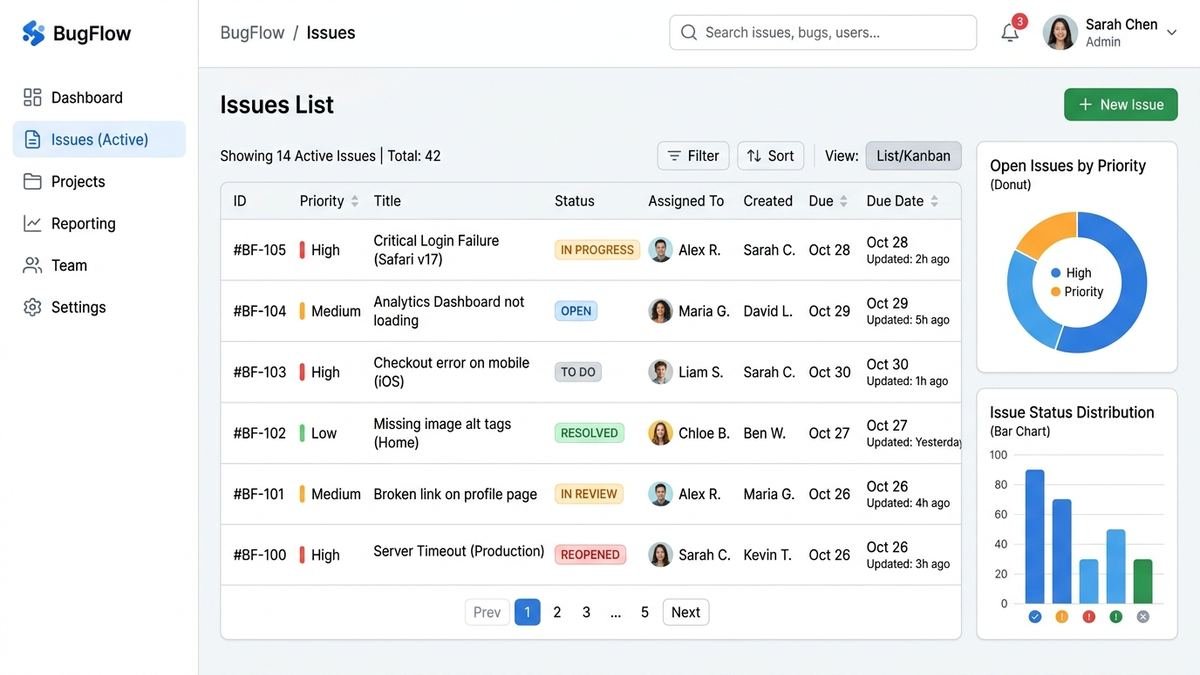
EndBugFlow is publicly described as a bug tracking and debugging workflow platform for software development teams. According to third-party guides, it’s designed to help developers detect, log, prioritize, investigate, and resolve software defects — the unglamorous but essential work of keeping applications reliable.
The claimed workflow follows a standard debugging cycle:
Problem detected → context captured → issue analyzed → developer investigates → fix released → monitoring continues
In more detail, EndBugFlow-related content describes these stages:
- Detecting problems — crashes, exceptions, failed API requests, slow responses, auth failures, broken features
- Capturing technical context — error messages, stack traces, console logs, timestamps, app versions, browser/OS details, network activity
- Organizing issues — grouping related events into structured bug reports instead of raw log chaos
- Prioritizing — ranking by severity and business impact
- Investigating and fixing — developers work the issue with full context attached
- Monitoring after the fix — watching to confirm the problem stays fixed
Some guides additionally describe EndBugFlow as a lightweight CLI-style tool that plugs into GitHub Actions workflows — installed on a dev machine, configured via YAML in .github/workflows/, triggered by events like pushes, with logs reviewable inside GitHub Actions. That GitHub-centric description is the most concrete technical claim in circulation.
An Honest Disclosure
Here’s what careful, fact-checked coverage of EndBugFlow consistently finds: there is not enough reliable first-party documentation to confirm every capability attributed to it. Its public identity is clearer as a debugging-related content brand and workflow concept than as a fully documented commercial product with public pricing, a verifiable company behind it, changelogs, and security documentation.
That doesn’t mean the debugging workflow it describes is wrong — the Detect → Capture → Analyze → Prioritize → Fix → Monitor cycle is exactly how professional teams work. It means you should treat feature lists as claims to verify, not facts, before depending on EndBugFlow for production systems.

How EndBugFlow Claims to Work: Step by Step
Taking the guides at face value, here’s the practical workflow EndBugFlow describes:
1. Installation and Setup
Install the tool on your development machine, create a project workspace, add team members with roles, and configure notification preferences so the right people get alerted when issues appear.
2. Connecting Your Repository
For the GitHub Actions angle: create or clone a repository, ensure it has a .github/workflows/ directory, and add the EndBugFlow-related commands to a YAML workflow file. Configure a trigger event (e.g., on push).
3. Detecting and Logging Bugs
Bugs enter the system through automated capture (APIs, error handlers submitting problems directly with reproduction steps, stack traces, and environment details) or manual entry (description, reproduction steps, screenshots, log files).
4. Triage and Assignment
The platform reportedly recommends developers for each issue based on workload and skills — you can accept the suggestion or assign manually. Priority algorithms rank issues by severity and business impact.
5. Investigation and Resolution
Developers work issues with full technical context attached: what happened, when, in which version, on what environment, and what the user was doing. Status tracking gives QA and project managers visibility into progress and bottlenecks.
6. Verification and Monitoring
After a fix ships, monitoring continues to confirm the issue is resolved and to catch regressions early.

Claimed Features at a Glance
| Claimed Feature | What It Reportedly Does | Verification Status |
|---|---|---|
| Automated issue detection | Captures errors via APIs/handlers without manual input | Claimed, not independently demonstrated |
| Context capture | Logs, stack traces, environment details attached to issues | Plausible, standard for the category |
| Priority engine | Ranks issues by severity and impact | Claimed |
| GitHub Actions integration | YAML workflow triggers and log review | Described in Mac/GitHub-focused guides |
| Team collaboration | Assignment, roles, notifications | Standard category feature |
| Jira/Slack integrations | Connects with existing dev tools | Claimed, details unclear |
| Post-fix monitoring | Watches for regressions | Claimed |
Who Is EndBugFlow For (If the Claims Hold)?
- Agile/DevOps teams that want bug tracking integrated with their CI/CD pipeline
- QA testers who need detailed logs attached to every issue for faster verification
- Project managers who want visibility into bottlenecks and team efficiency
- Solo developers and startups looking for a lightweight alternative to heavier platforms
What to Verify Before You Install or Connect a Repository
This is the most important section of this guide. Before giving any debugging tool access to your code, CI pipeline, or production telemetry, verify:
- The official source. Is there an official website with documentation, not just third-party guides? Download only from the official source.
- The company behind it. Real company name, contact information, terms of service, privacy policy. Absence of these is a red flag.
- What permissions it needs. A GitHub Action that requests broad repository or organization permissions deserves scrutiny — use least-privilege tokens and test on a non-critical repo first.
- Where your data goes. Bug reports contain stack traces, environment details, and sometimes user data. Know where that’s stored, for how long, and under what jurisdiction.
- Pricing and limits. If there’s no public pricing, assume you’ll discover the cost at the worst possible moment.
- Security posture. SOC 2, vulnerability disclosure process, and how secrets in logs are handled.
These checks apply to every tool in this category, not just EndBugFlow.
Established Alternatives Worth Comparing
If you need proven bug tracking today, the category has mature options with public documentation, transparent pricing, and verifiable security:
- Sentry — application monitoring and error tracking with generous free tier
- Jira — the enterprise standard for issue tracking (pairs with everything)
- Linear — fast, modern issue tracking loved by product teams
- GitHub Issues — already in your repo if you use GitHub; zero new permissions needed
- Bugzilla / Redmine — open-source, self-hosted options for full data control
Compare any newcomer — EndBugFlow included — against these on documentation quality, permission scope, and data handling before migrating real workflows.
AI is increasingly part of the debugging loop itself, from AI code review to AI-assisted root-cause analysis. For context on where AI tooling stands, see our ChatGPT vs Copilot comparison and our guide to how to use Grok AI. And if you’re curious where computing itself is headed — which ultimately determines what debugging tools can do — the latest quantum computing breakthroughs are worth a look.
For the most detailed independent walkthrough of the EndBugFlow workflow claims, see the fact-checked guide at TycoonStory — it is careful to distinguish documented facts from claims.
The Anatomy of a Good Bug Report
Whether or not you ever touch EndBugFlow, the debugging discipline it describes is worth learning. Most developer time wasted on bugs isn’t wasted fixing them — it’s wasted on bad bug reports that lack the context needed to reproduce the problem. A report that takes five minutes to write well can save five hours of back-and-forth.
A strong bug report contains:
- Title that summarizes the failure — “Checkout returns 500 when cart contains gift card + promo code,” not “checkout broken.”
- Environment — app version, OS/browser, device, and whether it reproduces in staging.
- Reproduction steps — numbered, starting from a clean state, specific enough that a stranger could follow them.
- Expected vs. actual behavior — one sentence each. This is the single most skipped and most valuable field.
- Evidence — the exact error message, stack trace, request/response pair, or screen recording. “It doesn’t work” with no evidence is not a bug report; it’s a rumor.
- Frequency and scope — every time, intermittent (how often?), or seen once? One user or all users?
- Severity and impact — who can’t do what, and what it costs. This drives prioritization.
Notice this is exactly the “context capture” stage EndBugFlow claims to automate. The lesson: even with automation, teams that train everyone to write reports like this resolve issues dramatically faster than teams relying on tooling alone.
Building a Debugging Workflow Without EndBugFlow
If EndBugFlow’s unclear product status gives you pause, you can assemble the same workflow from proven, documented tools — most with free tiers:
Capture: Sentry’s free tier gives you error tracking with stack traces, breadcrumbs (what the user did before the crash), and release tracking. For frontend issues, its session replay shows you the bug happening. This covers the “detect + capture” stages with a real company, real docs, and real SOC 2 compliance behind it.
Organize and prioritize: GitHub Issues (free, zero new permissions if you’re already on GitHub) with labels for severity and issue templates that enforce the anatomy above. Linear if you want speed and polish; Jira if you’re in an enterprise that already standardized on it.
Automate: GitHub Actions (free for public repos, generous free minutes for private ones) can run your test suite on every push, post results to Slack, and even auto-create issues from failing scheduled checks. This is the concrete, verifiable version of the “GitHub workflow automation” EndBugFlow guides describe — implemented with tooling whose permissions model you can actually audit.
Monitor after fixes: Sentry’s release tracking marks issues as resolved-in-a-release and reopens them automatically on regression. Uptime monitors (UptimeRobot, Better Stack) watch from the outside.
Total cost to start: $0. Total documentation available: thousands of pages. That’s the bar any new entrant — EndBugFlow included — has to clear before it earns a place in your pipeline.
Debugging Metrics Worth Tracking
If you’re building a serious debugging workflow — with EndBugFlow, Sentry, or a spreadsheet — these are the metrics that actually tell you whether it’s working:
Mean Time to Resolution (MTTR). From bug reported to fix verified in production. Track it by severity: a P1 MTTR of 4 hours with a P3 MTTR of 3 weeks is healthy; the reverse means your prioritization is broken.
Bug escape rate. What percentage of bugs are found by users rather than by your own testing and monitoring? A rising escape rate means your detection stage (automated tests, error tracking, QA) needs investment — exactly the “detect” stage debugging platforms claim to improve.
Reopen rate. What percentage of “fixed” bugs come back? High reopen rates point to rushed fixes, missing reproduction steps, or verification stages being skipped. This is the metric that justifies the “monitor after fix” stage.
Bug age by severity. How long do P1/P2 issues sit untouched? This measures triage discipline more than developer speed.
Report quality score. Informally: what percentage of incoming reports contain reproduction steps and environment details? If it’s under half, invest in issue templates and reporter training before buying new tooling — no platform fixes bad input.
You don’t need EndBugFlow or any specific product to track these; a weekly review of your issue tracker with these five numbers will improve most teams’ debugging faster than any new tool purchase.

CI/CD Basics: The Pipeline EndBugFlow Plugs Into
EndBugFlow guides talk a lot about CI/CD pipelines and GitHub Actions, so here’s the 2-minute primer that makes those claims legible — and lets you build the automation yourself with documented tools.
CI (Continuous Integration) means every code change gets automatically built and tested when pushed. A developer pushes to GitHub → a runner spins up → the test suite executes → results post back to the pull request. Broken code gets caught in minutes, not days.
CD (Continuous Deployment/Delivery) extends that: passing changes deploy automatically (or with one approval click) to staging or production. The pipeline becomes the only path to production, which means every release is tested, traceable, and reversible.
GitHub Actions is GitHub’s built-in automation engine. You define workflows as YAML files in .github/workflows/. A minimal CI workflow looks like this:
- Trigger:
on: [push, pull_request] - Runner:
runs-on: ubuntu-latest - Steps: check out code → set up language runtime → install dependencies → run tests → report status
That’s the entire mechanism behind claims like “EndBugFlow triggers workflows on push and lets you review logs in GitHub Actions” — it’s standard Actions behavior. You can add bug-tracking automation yourself: a scheduled workflow that runs your test suite nightly and auto-opens a GitHub Issue (with logs attached) on failure replicates the “detect → log” stages with zero new dependencies. Understanding this baseline is what lets you evaluate whether any debugging tool’s “CI/CD integration” is genuinely valuable or just repackaged Actions features.
Frequently Asked Questions
Is EndBugFlow real software?
EndBugFlow is a real term associated with debugging workflow content and described as bug-tracking software across many guides. However, independent fact-checking finds limited first-party documentation confirming it as a fully documented commercial product. Treat it as a workflow concept with claims to verify.
Is EndBugFlow free?
No reliable public pricing information is available, which itself is worth noting. Don’t assume free — verify pricing from an official source before planning around it.
Does EndBugFlow automatically fix bugs?
Some guides claim automated fix suggestions, but this is not independently demonstrated. No tool should auto-modify production code without human review regardless.
Does EndBugFlow integrate with GitHub?
Guides describe a GitHub Actions-based workflow (YAML configuration, push triggers, log review). The exact mechanism isn’t fully documented publicly, so test on a non-critical repository first and review requested permissions carefully.
Is EndBugFlow safe to install?
Apply the standard checks: official download source, known vendor, minimal permissions, and clarity on where your telemetry data goes. Without those answers, don’t connect it to important repositories.
What should I use instead for bug tracking?
Sentry (error tracking), Jira or Linear (issue tracking), or GitHub Issues (zero-setup if you’re on GitHub) are proven alternatives with transparent docs and pricing.
The Bottom Line
EndBugFlow describes a sensible, standard debugging workflow — detect, capture, analyze, prioritize, fix, monitor — and some guides tie it concretely to GitHub Actions automation. But its exact product status, pricing, and verified capabilities remain unclear, with its public footprint looking more like a content brand than a documented commercial platform. Use this guide’s verification checklist before installing anything, test on non-critical projects first, and compare against established tools like Sentry, Jira, or Linear before committing real workflows.