Software Name MeetShaxs: What It Is & How to Evaluate It
If you typed “software name meetshaxs” into Google, you’re probably confused — and honestly, you have good reason to be. The phrase itself reads like a garbled SEO keyword rather than a real product name, and what you’ll find online is a strange mix: dozens of articles describing “MeetShaxs” in glowing terms as an all-in-one team communication platform, but no official website, no pricing page, no app you can actually download, and no verifiable company behind it.
This guide does something most articles about MeetShaxs won’t: it tells you what the web claims, what we could actually verify, and — most usefully — how to evaluate any unfamiliar software before you trust it with your team’s data. If you’re just looking for a solid team communication tool, you’ll also find practical direction here.
What the Web Claims MeetShaxs Is
Across numerous online articles, “MeetShaxs” (sometimes written “MeetsHaxs”) is described as an all-in-one communication and collaboration platform for remote and hybrid teams. Here’s the feature set those articles attribute to it:
| Claimed feature | Description in articles |
|---|---|
| HD video conferencing | Crystal-clear video with adaptive bandwidth |
| Team chat | Instant messaging, group and private chats |
| Project management | Task creation, assignment, tracking, deadlines |
| File sharing | Cloud-based document collaboration with version control |
| AI meeting summaries | Automatic transcription and meeting notes |
| Smart audio | AI noise cancellation and speaker enhancement |
| Workflow automation | Rule-based triggers across connected tools |
| End-to-end encryption | Security for sensitive industries |
Some articles go further, claiming teams report “up to 40% improvements in meeting efficiency,” and describing AI-powered scheduling that syncs with Zoom, Teams, or Google Meet. It sounds, frankly, like a very attractive product — a single dashboard replacing Slack, Notion, Trello, and Zoom at once.
What We Could Actually Verify: Almost Nothing
Here’s where honesty matters. When we went looking for independent confirmation that MeetShaxs exists as a real, purchasable product, here’s what we found — and didn’t find:
Not found:
– No official product website or vendor homepage
– No pricing page or plan documentation
– No listing on major software directories with verified vendor profiles
– No independent review history from verified users
– No official documentation, API references, or support portal
– No clearly identified company, founders, or headquarters
Found:
– Many articles on low-authority content sites describing it in similar, generic terms
– At least one honest write-up explicitly warning that “publicly verifiable information about an actual MeetShaxs product is limited” and advising businesses to verify vendor, security documentation, and support resources before adopting any unfamiliar platform
This pattern — lots of descriptive articles, zero verifiable product footprint — is a classic signature of SEO content-farm output: articles written to rank for a keyword phrase rather than to describe something real. The keyword itself, “software name meetshaxs,” reads like a fragment from keyword research tooling (as in: “[software name] + meetshaxs”) that got published as a topic.
Our assessment: Treat “MeetShaxs” as an unverified concept, not a product you can buy or download today. Don’t enter payment details, grant calendar access, or install anything claiming to be MeetShaxs until a verifiable vendor exists.
Why Does This Keyword Even Exist?
Understanding the mechanics helps you navigate similar situations in the future. Here’s the likely story:
- Keyword tools surface odd phrases. SEO tools suggest long-tail phrases based on search patterns. “Software name meetshaxs” looks like a templated query — someone searching for the name of some software, with “meetshaxs” possibly being a mishearing or garbling of something else.
- Content farms pounce. Low-quality publishers generate articles for every keyword phrase with any search volume, regardless of whether a real product exists. Each article paraphrases the others, creating an illusion of consensus.
- The illusion compounds. Once 20 articles describe MeetShaxs’s “features,” the 21st article cites the pattern as fact. Readers (and sometimes AI tools) mistake repetition for verification.
This doesn’t mean everyone writing about it is acting in bad faith — but it does mean repetition is not evidence. Ten articles saying the same thing, all without a primary source, equal zero verified facts.
How to Evaluate Any Unfamiliar Software: A Checklist
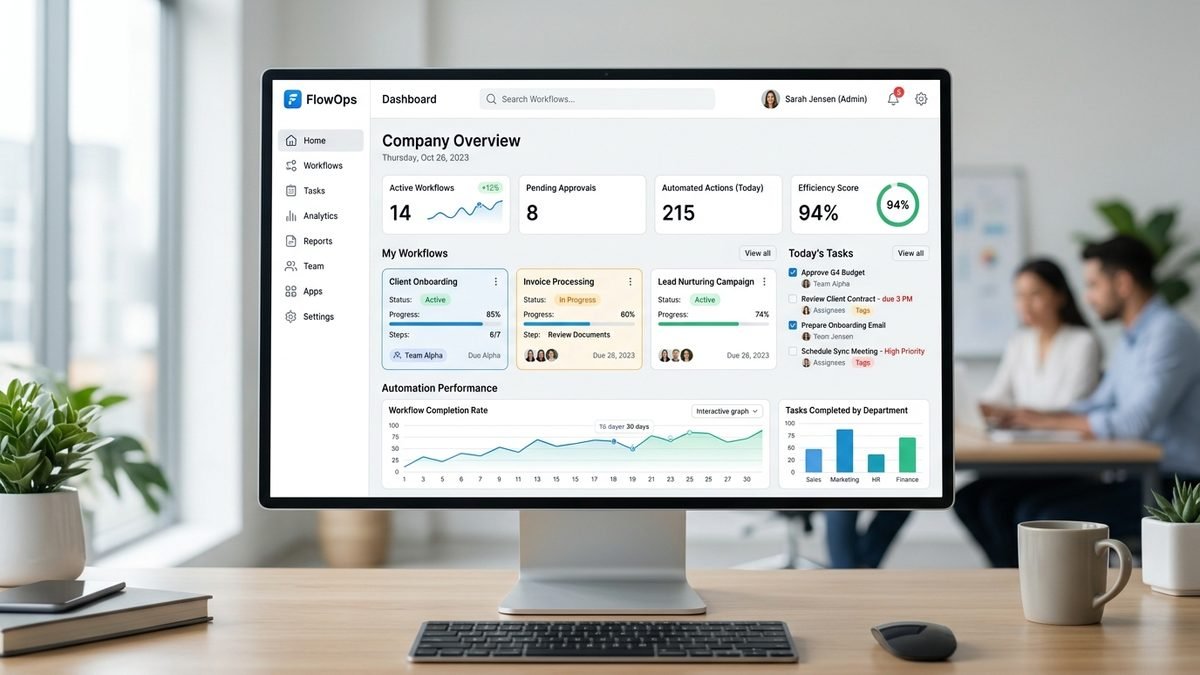
The MeetShaxs situation is a perfect case study for a skill every tech buyer needs: vetting software you’ve never heard of. Run through this checklist before adopting anything unfamiliar:
1. Find the vendor’s official domain
Real products live at real domains with about pages, contact information, and legal terms. If you can’t find an official site within 30 seconds of searching, that’s a major red flag.
2. Check independent software directories
Established B2B software appears on directories with verified vendor profiles and user reviews. Absence from all of them is telling.
3. Look for documentation and support channels
Real products have docs, changelogs, status pages, and support emails or chat. Marketing copy without documentation is just copy.
4. Verify security and compliance claims
Any tool asking for your team’s meetings, messages, or files should publish a security whitepaper, data processing terms, and compliance certifications (SOC 2, ISO 27001, GDPR documentation). “End-to-end encryption” in a blog post is not a security audit.
5. Demand a trial before any commitment
Legitimate SaaS products offer free trials or freemium tiers. Never pay upfront for software you can’t test, and never grant broad permissions (calendar, contacts, drive access) to an unverified app.
6. Search for the company, not just the product
Look up the business entity: LinkedIn company page, Crunchbase profile, founder names, funding history, headquarters address. Real companies leave corporate footprints.
7. Be skeptical of superlatives without sources
“40% more efficient,” “revolutionizing teamwork,” “loved by thousands” — without named customers, case studies, or methodology, these are decoration.
If a product fails most of these checks, walk away no matter how good the feature list sounds.
Red Flags Specific to the MeetShaxs Articles

A few things in the existing coverage should sharpen your skepticism:
- No screenshots or product UI anywhere. Every article describes the interface; none shows it.
- Feature lists that mirror each other. The same table of features (video + chat + tasks + files + AI summaries) repeats across sites with slightly reworded sentences — the hallmark of paraphrase-farm content.
- Vague AI claims. “AI-powered” appears constantly without specifics: which models, what data handling, what accuracy? Real AI features come with technical detail.
- The name itself is unstable. “MeetShaxs” vs. “MeetsHaxs” — real brands don’t have spelling variants across their own coverage.
- No pricing, ever. Even the most promotional articles never mention what it costs, because there’s nothing to price.
What to Use Instead: Established Alternatives
If what attracted you was the idea — one workspace for meetings, chat, tasks, and files — that idea is real, and mature products deliver it today:
- For all-in-one teamwork: Microsoft Teams and Google Workspace bundles cover meetings, chat, docs, and tasks with verified security programs and transparent pricing.
- For AI meeting notes specifically: dedicated AI notetakers integrate with Zoom, Meet, and Teams — and our ChatGPT vs Copilot comparison breaks down which AI assistant fits different work styles if you’re evaluating AI tools generally.
- For project-centered collaboration: established project platforms with real review histories and free tiers let you test before committing.
The broader lesson applies beyond this one keyword: when evaluating software in fast-moving categories like AI and collaboration, independent verification beats marketing volume every time. Our latest quantum computing breakthroughs roundup is another example of why primary sources matter — real advances come with named labs, published papers, and verifiable claims. If you’re comparing obscure software utilities more broadly, our Shotscribus software guide walks through a similar evaluation.
Examining the Claims Feature by Feature
Let’s take the attributed feature list seriously for a moment and ask: what would each claim require if it were real? This exercise shows how thin the coverage is.
HD video conferencing with adaptive bandwidth. Real video platforms publish technical details: supported codecs (VP8/VP9/AV1/H.264), maximum participants, bandwidth requirements, and whether they use SFUs or peer-to-peer architecture. The MeetShaxs articles mention none of this — just “crystal-clear.”
AI meeting summaries and transcription. Real AI notetakers name their models or at minimum describe accuracy benchmarks, supported languages, speaker diarization, and data retention policies. The articles say “AI-powered” and stop there. For a feature handling your most sensitive conversations, that vagueness alone is disqualifying.
End-to-end encryption. This is a precise technical claim with a precise meaning — and a precise way to verify it (published cryptography whitepapers, independent audits). No article about MeetShaxs links to either. For comparison, real encrypted messengers publish exactly these documents.
Workflow automation and integrations. Real platforms list their integrations by name with setup docs. The articles say MeetShaxs “connects your favorite apps” without naming a single one.
The pattern is consistent: every claim is exactly one adjective deep. That’s not how real products are described by people who’ve used them.
The Anatomy of a Phantom Product
How does something with no verifiable existence accumulate dozens of descriptive articles? The mechanics are worth understanding because you’ll encounter this pattern again:
Another name we put through the same checks is EndBugFlow — see our EndBugFlow investigation for what’s verifiable. EndBugFlow investigation and findings
MeetShaxs isn’t the only keyword-only tool name — we ran the same verification process on Talkehr, and you can read what we found. our Talkehr software verification
- Keyword discovery. SEO tools surface unusual long-tail phrases. Someone’s tool suggested a phrase shaped like “software name + meetshaxs,” possibly from voice-search garbling or a typo of something else entirely.
- First-mover content. A content site publishes “What is Software Name Meetshaxs?” — inventing a plausible description from the name alone (it sounds like a meeting tool, so: video conferencing, chat, AI summaries).
- Paraphrase cascade. Other content farms rewrite the first article just enough to avoid duplicate-content filters. Each rewrite preserves the invented facts while adding small embellishments.
- False consensus. Search results now show 15 articles “confirming” the same feature set. To a casual searcher — or a careless AI summary — this looks like corroboration.
- Monetization attempt. Eventually someone may try to rank a download page or affiliate link on the manufactured demand. This is where phantom products become actively dangerous.
The defense is always the same: trace claims to primary sources. If every article’s ultimate source is another article, you have a rumor, not a product.
Real Products That Deliver the “One Workspace” Idea
The vision attributed to MeetShaxs — meetings, messaging, tasks, files, and AI assistance in one place — is legitimate and well-served by established vendors. Here’s how the real options compare on the dimensions that matter:
| Need | Established option | Why it’s verifiable |
|---|---|---|
| Video + chat + collaboration | Microsoft Teams | Published security docs, transparent per-user pricing, millions of enterprise seats |
| Docs + meetings + AI | Google Workspace with Gemini | Public admin documentation, compliance certifications, free trial |
| Chat-first teamwork | Slack | Independent security audits, public changelog, app directory with 2,600+ named integrations |
| AI meeting notes | Dedicated AI notetakers (several mature vendors) | Named model behavior, published data-retention policies, SOC 2 reports |
| Project + communication | ClickUp / Asana / Monday | Verified review histories, public pricing, free tiers |
Notice what each row has that MeetShaxs coverage lacks: named security documentation, transparent pricing, and third-party verification. That’s the gap between a product and a rumor.
What to Do If You Already Engaged With Something Called MeetShaxs
If you (or someone on your team) already signed up for, installed, or paid for something marketed as MeetShaxs, take these steps:
- Don’t enter further credentials or payment details. Treat the service as untrusted until verified.
- Revoke granted permissions. Check your Google/Microsoft account’s third-party access pages and remove anything unfamiliar.
- Scan for malware if you installed a desktop app or browser extension from an unofficial source.
- Monitor financial statements if you paid anything, and consider disputing charges for a product that doesn’t verifiably exist.
- Report it. Flag suspicious download pages to Google Safe Browsing and the relevant app stores.
This isn’t alarmism — unverified software making big claims is exactly the profile used in phishing and malware campaigns.
Frequently Asked Questions
Is MeetShaxs a real software?
As of 2026, we could not verify MeetShaxs as a real, commercially available product. Many articles describe it as an all-in-one team communication platform, but there is no official website, pricing page, vendor identity, or independent review history we could confirm. Treat it as unverified.
Can I download MeetShaxs?
We found no legitimate download source, app store listing, or official installer for anything called MeetShaxs. Be extremely cautious of any download claiming to be it — unverified installers are a common malware vector.
How much does MeetShaxs cost?
No pricing information exists from any verifiable source, because no verifiable vendor exists. Any article quoting MeetShaxs pricing would be inventing it.
Why do so many articles describe MeetShaxs’s features?
The articles appear to be SEO-driven content written to rank for the keyword phrase rather than product journalism. They paraphrase each other without citing primary sources — repetition across content farms is not verification.
I need an all-in-one team platform — what should I actually buy?
Start with established options: Microsoft Teams, Google Workspace, or Slack paired with a project tool. All three have transparent pricing, free trials, published security documentation, and millions of verified users. Evaluate them against the checklist above.
How can I check if unfamiliar software is legitimate?
Find the official domain, check independent directories and reviews, read the documentation and security whitepaper, verify the company entity, and always trial before paying. If most of those come up empty — as with MeetShaxs — don’t proceed.
Could MeetShaxs become a real product later?
Possibly — names get reused, and someone could launch a real product under this name tomorrow. That’s exactly why verification is a habit, not a one-time check. If a genuine MeetShaxs appears with an official domain, documentation, transparent pricing, and independent reviews, evaluate it on those merits. Until then, the guidance in this article stands.
What’s the single fastest legitimacy test for unfamiliar software?
Search for “[product name] pricing” and “[product name] documentation.” Real commercial software almost always surfaces both within seconds. If neither exists — as with MeetShaxs — you have your answer faster than any other check.
The Bottom Line
“Software name meetshaxs” is a keyword in search of a product. What’s described online sounds appealing — unified meetings, chat, tasks, files, and AI summaries — but without a verifiable vendor, website, pricing, or documentation, there’s nothing real to evaluate or buy. The most valuable takeaway isn’t about MeetShaxs at all: it’s the checklist. Apply it to every unfamiliar tool before it touches your team’s data, and you’ll never be burned by a phantom product.
Bookmark it, share it with your team, and make verification a habit rather than an afterthought. For more on what’s actually being written about the topic, see these explainers (editorialge.com and cnvrtool.com) — read them with the verification lens this article gave you.